How to Think About the Economy in 2026
Hi! How’s everyone? Merry Christmas and happy holidays to all. Apologies for being a bit quiet (there's a bonus Snowy pic at the end so you know I mean it.) Quite a bit’s been going on (we’re moving, among other things.) All is well and we’ve had a fun Christmas. How’s yours been?
Today we’re going to talk about how to think about a world changing around us, in dramatic and profound ways. I’m going to use America’s “affordability crisis” as an example to teach you how to (really) think about the economy.
I emphasize that because many of you haven’t been taught well. Especially in America. That’s not your fault. The result is there’s this sort of eternal confusion, and I have to write a post I write every year: if the economy’s booming, then how come…people are so anxious, stressed, and angry about it? At it? If a thing is doing well, how can it be bad for people?
A friend said to me the other day, reading my latest essays: “you’re pretty down on America.” Who’s not? And yet. The point is emphatically not that. How should you think about “an economy”? What’s going wrong with America’s? With America, period?
When I write sentences like “America’s a capitalist society,” that’s not an insult, a taunt, or a put-down. This isn’t a leftist college seminar. We are learning how to think. And to do that well, we have to begin with facts. So: it’s a fact that America’s a capitalist society. That’s how I mean it.
Think of capitalism what you will. There are elements of it I like, and those I don’t. Many nights, you can find me curled up with Snowy, watching football or basketball. If you ask me, sports with your dog is pretty close to heaven. Pretty capitalist, very American, chuckle if you like. So: none of this is about what I believe. Or what you do. Just reality. We will all leave our beliefs at the door now. And the first thing you might notice when you do that is this.
American economists, notice carefully, don’t ever say anything remotely like: “America’s a capitalist society.” They don’t for a reason. To most of them, that’s a redundant statement: “a capitalist society,” aka, economy. There is no other kind of economy, really, that one should have.
In other words, capitalism is assumed to be the answer to every problem. This is a technical way American economics thinks, right down to equations, by the way.
That’s not theoretical. It’s super, super real. That’s how you get to, for example, the very American idea, which is deeply weird and alarming to the rest of the world, for example, of private “health insurance.” The invisible hand—how Adam Smith put the force of markets—is, again, assumed to be capable of solving every problem that human existence ever presents. And it all that freedom is, too, but I digress.
All of this was once properly called “political economy.” This is a field that’s not very American. In America, there’s now just a field called just “economics.” Originally, though, it was called “political economy,” for the reason that you couldn’t just separate the two. They inhered together. America believed differently: you could subtract politics from economics, precisely because you didn’t need politics, since the invisible hand, aka markets, was capable of solving…everything. Healthcare, education, retirement, every facet of human existence..
Hence, when American economists and finance types talk about “the economy,” what they’re really talking about is capitalism. And they are assessing its health. But its health is emphatically not that of much else. That is why in America, we see this terrible, weird disjunction: the economy, aka capitalism, can “boom,” while people’s lives fall apart. Is the stock market rising again today? Does anything else matter? If it doesn’t, what is “an economy?”
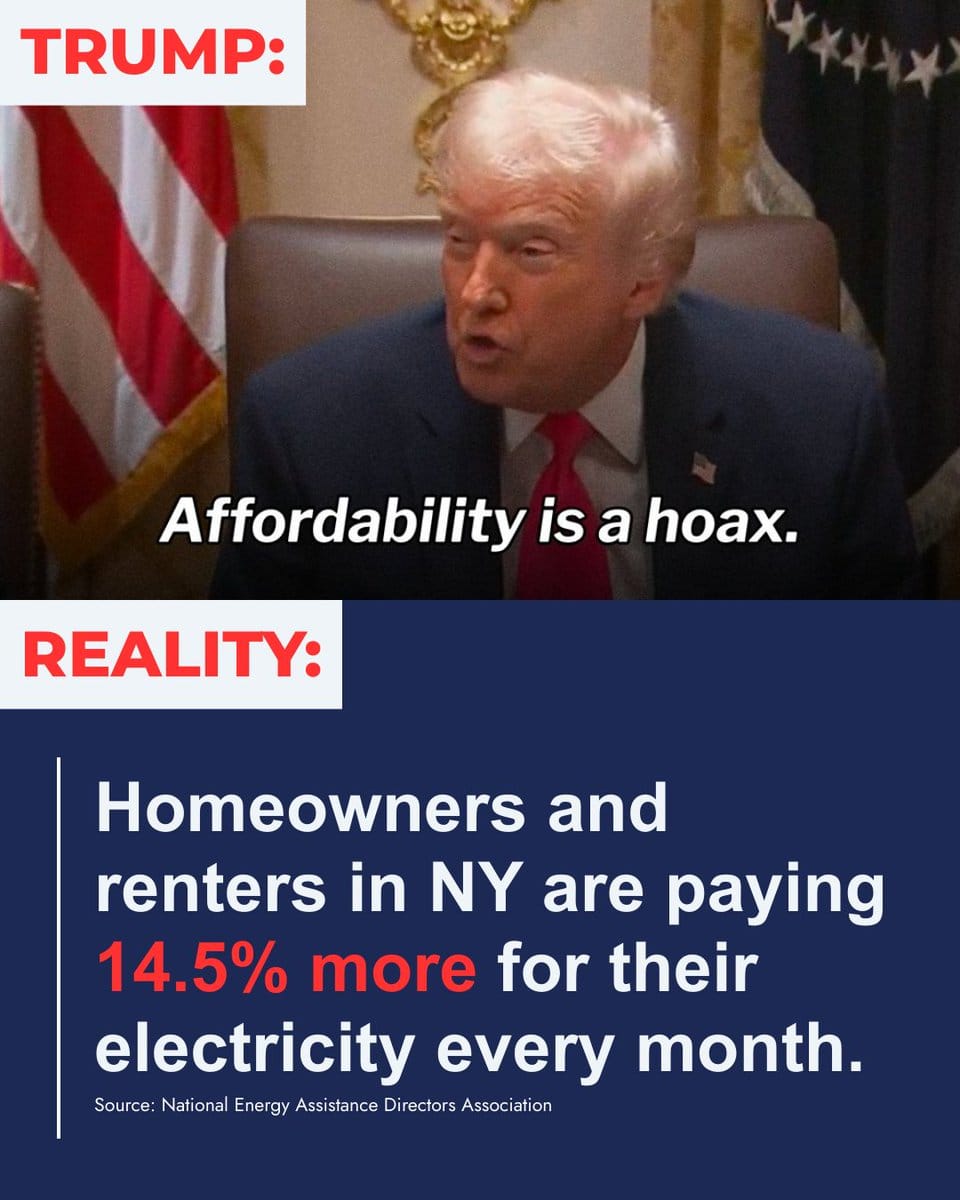
It’s straightforward to say: that if a society has a capitalist economy, the rich will get richer, while the poor get poorer, because the rate of exploitation must always increase, since that is what the system is for. And all that has a real meaning: shorter, unhappier, poorer lives, right down into political oblivion. But is this all there is to “an economy”? And if it is, how far away are we from “affordability is a hoax”?
Yet for example, and I’m going to paraphrase here, Thomas Piketty, one of France’s great economists, the luminary of the Paris School of Economics, has said recently, when we talk about “the economy,” we mean people’s living standards, how they’re really doing, how they are living, in a deeper, and much more human sense. So: the Paris School thinks very differently about what an economy is.
Which definition makes more sense to you?
Now you begin to understand the source of all this confusion. In America, especially. How can it be that…”the economy” is booming…yet people are so sharply pessimistic and anxious about it? That’s because people don’t figure into this equation at all, only capital does. When we say “the economy” in America, we mean capitalism, which in turn means: how is capitalism faring? And on that score, well, you might say, crudely, that capital is “booming,” or “roaring,” at least if you believe Trump’s cooked books. But…
Should our thinking be so simplistic and naive as to leave human beings, their lives, society, and politics, “out of” economics? Isn’t something wrong here? you might ask yourself, and you would be right.
If, in this case, people are afraid of “the economy,” then it suggests that they’re struggling. Which they very much are, in America’s “affordability crisis.” And that “affordability crisis” is really just the flipside of capitalism doing very well: it’s exploiting people at a rate which is crushing them.
But all of that spells real trouble ahead. Because of course people can’t keep up this rate of exploitation forever, or even much longer. At some point, those feelings of dread and despair reflect the fact that people do not have the money to feel comfortable, secure, or safe anymore. And that is going to very much affect even capitalism.
These are crises of demand. They happen when capitalism’s rate of exploitation surges so high that a hole is punched through the economy. People stop being able to consume at such high rates, and of course, then growth slows, profits fall, and so forth. And they can be so severe that they lead to depressions. Right now, it’s pretty clear that America’s entering a period of stagflation. That is what “affordability crisis” means, in plainer English, and that presages worse to come: a crisis of demand.
Now let’s come back to how to think about economics well. Doing that means employing the much more sophisticated paradigm of political economy, not just American-style “economics.” That discipline is becoming obsolete now, just as capitalism is. The fact—and again, it’s a fact—that, for example, the Paris School can explain the modern world much, much better than any American economist can is a devastating example.
What I mean by that is this. Why is it that a latte costs me maybe four to five times as much in America as Paris, and twice as much as in Canada? Makes no sense, right? Part of that’s tariffs, but even that is only because America’s a very different kind of political economy. And these different forms are what we are really we must understand if we are to think well.
What we don’t have from American thinking is exactly that: how do different kinds of political economies prosper-or falter? That is because, and this part is almost funny, it assumes there aren’t any apart from capitalism.
Which is weird. Because, LOL, there are. Many of them. So much that, go ahead and chuckle, there is a very real way of thinking literally called the Paris School, which is about them. So here we meet the problem of ideology. American ways of thinking assume the world doesn’t actually exist, and never has. Pretty Soviet? You decide.
And this is what Piketty’s been talking about lately. That while seen through the American lens of “growth” and “money,” Europe’s lagging behind, in fact, through every other kind of lens, Europeans live far, far superior lives. Longer, happier, closer, just better ones.
In America, we can say that capital grows, true, but only in the form of money, which has come at a very, very steep price, which isn’t just the quality and quantity of life, but social disintegration and political instability.
So for example, it’s easy to see that American style capitalism has destabilized the polity itself, and America’s now collapsing politically (unless you think, for example, that what Trump is doing is somehow remotely normal and highly democratic.) Meanwhile, what Piketty is pointing out is a paradigmatic conclusion: that social democracy has achieved a higher level of real, aka human, prosperity, including greater stability.
These are real differences in forms of political economy that are now emerging in our world.
And they are what the 2020s are really about.
In America, capitalism has succeeded in its own terms, that’s true, but that’s about all, and in deeper terms, its price has been incredibly steep: a set of costs which include political collapse, social disintegration, and widespread unaffordability. All of this is a vicious cycle.
Meanwhile, European social democracy has succeeded in just those deeper terms. People live well, societies are relatively stable, meaning, by and large, they haven’t politically imploded like America, even if they’re turned to the right, and constitutions, rights, and laws are largely intact. And all of this is a virtuous circle.
In that sense, an intelligent mind might conclude something like the following: different forms of political economy have very different possibilities, and ultimately, outcomes. And in 2026, those differences are coming into incredibly stark relief.
So.
Thinking in terms of political economy—and particularly how outcomes differ amongst its forms—is how to think about the world well in the 21st century.
Especially for Americans, because only doing that can really explain the paradox of where their society is—how can a “booming economy” be one of such widespread misery? How can it be producing so much unhappiness, in the form of anxiety and anger and despair, not to mention shorter lives themselves? Capitalism is what’s doing well, but only at the price of everything else.
Americans must learn to make these distinctions. Not for ideological reasons, and we aren’t discussing ideology at all, only reality. The truth is that they aren’t taught how to think in careful and sophisticated ways, even if they’re beginning to suspect that capitalism isn’t working. There are very, very powerful ways to think about politics and economics, but they’re not taught much in America, and certainly not on the news or on the TV channels, because nobody much is allowed to challenge the assumption that capitalism is the answer to everything.
America is finding out, the hard way, that it isn’t. And this is what I mean by “capitalism is obsolete.” It isn’t that I don’t like it, or that I’m lodging random insults. I’m trying to teach you what we see empirically and factually in the world. Just as one of the great lessons of the Soviet Union’s collapse was that communism doesn’t work as answer to everything, so too one of America’s collapse is that capitalism, in an equally pure state, predation all the way down, people having nothing as an answer to everything, doesn’t work, either.
None of this is just idle theorizing. I’m trying to teach you to think well for a reason.
What we’ve discussed above might be summarized as: a rapid, sharp divergence in the fortunes of different kinds of political economies. A Great Divergence, if you like, between America and former allies and neighbors.
And that Great Divergence is going to have profound consequences for investment and wealth going forward.
For example: even if it’s true that America’s stock markets continue to do well (which is both dubious and debatable, given that in 2025, global ones did often far, far better), should we be investing our wealth in systems that are producing their very own rapid destabilization? Is it a good idea to invest in a thing which is only putting itself at more and more risk? When I put it that way, you might even chuckle.
Or: should we now be developing new paradigms for investment and wealth, too, based on what we are seeing in the world, and learning about it?
I think that question answers itself. Because of course, by now, obviously, I’m doing the latter, and you can join me. And so we will be discussing all of that much, much more in the new year.
Thanks for reading and lots of love,
Umair (and Snowy!)
PS BONUS MOM N SNOWY PIC!!!!!!!!!!!!!!!

❤️ Don't forget...
📣 Share The Issue on your Twitter, Facebook, or LinkedIn.
💵 If you like our newsletter, drop some love in our tip jar.
📫 Forward this to a friend and tell them all all about it.
👂 Anything else? Send us feedback or say hello!
Member discussion